If you've ever pointed your binoculars at a small, plain, greenish-yellow bird in September and given up, you've met what birders have called "confusing fall warblers" for decades, a term that goes all the way back to a famous identification plate in Roger Tory Peterson's original field guide. Warblers moult out of their bright spring colours before heading south, and juveniles never had them to begin with, so fall identification really is a different skill than spring identification. It's a learnable one, though, and it comes down to a handful of field marks that hold up no matter how faded the bird looks.
Why Fall Warblers Are Harder Than Spring Ones
In spring, male warblers arrive in full breeding colour specifically to attract mates, which is exactly why they're so easy to identify. By fall, adults have moulted into duller, more muted plumage, and the birds moving through are a mix of worn adults and first-year juveniles that never had bright colours at all. The result is a lot of small, olive-and-yellow birds that look far more alike than they do in May.
The Field Marks That Still Work in Fall
Rather than relying on colour, focus on features that don't change with the seasons. Wing bars, whether a bird has them, how many, and how bold, are one of the most reliable marks, since wing bar pattern is structural rather than seasonal. Undertail covert colour, the feathers under the base of the tail, is another one worth checking specifically, since it separates several confusingly similar species. Tail pattern matters too: some warblers flash white patches in the outer tail feathers when they fan out, visible even in poor light. Face pattern, whether there's a complete eye ring, a broken one, or a plain eyeline, holds up regardless of plumage wear. Leg colour is a small but useful detail on a few key species. Finally, behaviour, particularly tail-bobbing, tail-wagging, and how low or high a bird forages, can clinch an identification before you've even worked through the plumage details.
12 Fall Warblers to Know
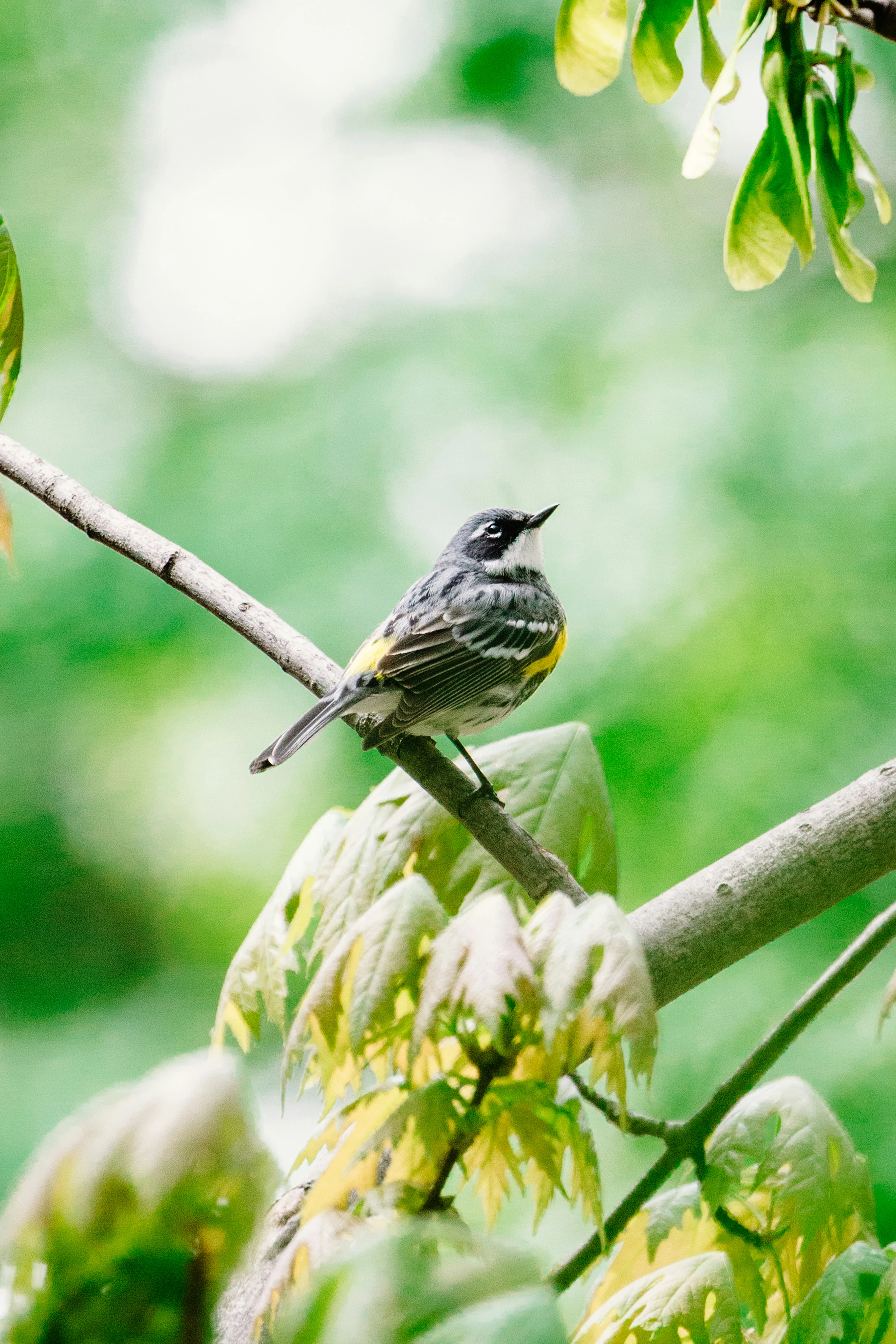
Yellow-rumped Warbler. By far the most common fall warbler in Canada, and one of the easiest. Even in dull fall plumage, the yellow rump patch stays visible, along with a yellow patch on each side of the breast. When in doubt in a mixed flock of confusing warblers, check for yellow-rumps first, since they're often the majority of the birds present.
Palm Warbler. Constant tail-bobbing is the giveaway here, a habit no other common warbler shares to the same degree. Fall birds are warm buffy-brown below with a hint of yellow under the tail, and they're often found low, on the ground or in short vegetation, rather than up in the canopy.
Common Yellowthroat. Males keep their black facial mask even into fall, making them easy. Females and immatures are plainer, but a yellow throat and undertail area, paired with a habit of staying low in thick, weedy or marshy cover, are reliable clues.
American Redstart. Adult males stay black with orange patches on the wings and tail. Females and first-fall birds are grey-olive with yellow patches in the same spots the male shows orange, a pattern birders sometimes call the "yellowstart." Watch for its habit of fanning its tail and flicking its wings while foraging.
Magnolia Warbler. Fall birds show a grey head, yellow rump, and a distinctive tail pattern: a white band across the middle of the tail with a solid black tip, visible from below when the bird spreads its tail. That tail pattern alone is enough to confirm the species even on a badly faded individual.
Black-throated Green Warbler. One of the fall warblers that keeps a reasonably intact pattern: greenish back, yellow face, and at least a trace of black on the throat, even on duller birds. The yellow face against a plain, unmarked expression is the quickest way to pick it out.
Blackpoll Warbler. The classic "confusing fall warbler." Streaky, olive-grey overall, with white undertail coverts and pale yellowish legs and feet that stand out against darker legs on similar species. When nothing else about a plain streaky warbler seems diagnostic, check the legs.
Bay-breasted Warbler. Frequently confused with Blackpoll in fall, but look for a wash of buffy or pale chestnut along the flanks, remnants of the breeding plumage, and darker legs than Blackpoll's pale ones. Undertail covert colour also differs subtly between the two if you get a good look.
Tennessee Warbler. Plain, unstreaked, greenish-grey above and whitish below, with a short, thin, sharply pointed bill. Its plainness is almost the identifying feature: if a small warbler looks like it has no pattern at all beyond faint whitish undertail coverts, Tennessee is a strong candidate.
Nashville Warbler. Similar overall plainness to Tennessee, but with a distinctive complete white eye ring and yellow underparts extending further up onto the throat. The combination of a bright eye ring and yellow throat separates it from the blanker-faced Tennessee.
Cape May Warbler. Fall birds are duller than their striking spring plumage but still show fine streaking on a yellowish breast and a thin, slightly decurved bill that's noticeably finer than most other warblers. A faint yellow patch on the side of the neck is worth checking for even when the rest of the bird looks washed out.
Wilson's Warbler. Small, plain yellow-olive overall, with beady dark eyes that stand out against a fairly plain face. Many individuals, including some females, retain at least a trace of the male's black cap, which is the quickest confirming mark when it's visible.
Where to Practice This
Any well-treed migration stopover in Ontario during September will produce a mix of these species, often in the same mixed foraging flock. Point Pelee and Colonel Samuel Smith Park, both regular stops for warblers earlier in the season, keep producing fall migrants too, just in duller plumage and smaller numbers than the spring push. We're also putting together a full guide to fall migration at Long Point, one of the province's best warbler corridors, for anyone looking for another location to add to the list.
Frequently Asked Questions
Why do warblers look so different in fall compared to spring? Most warblers moult after breeding season into duller, more camouflaged plumage for migration and winter. Juveniles making their first migration south never had bright breeding colours to begin with, so a fall mixed flock is mostly muted, similar-looking birds.
What is the single most useful field mark for fall warblers? There isn't one mark that works for every species, but undertail covert colour, wing bar pattern, and tail pattern are the three most reliable, since none of them depend on breeding plumage and all three hold up on worn adults and plain juveniles alike.
Are fall warblers harder to identify by call than by sight? Generally yes for beginners. Many species give only simple, similar-sounding chip notes in fall rather than their distinctive spring songs, so visual field marks are usually more dependable than call alone at this time of year.
When does fall warbler migration peak in Ontario? Late August through the first half of September is typically the peak window, though timing varies by species and by year depending on weather systems pushing migrants south.
Final Thoughts
Fall warblers reward patience more than any other identification challenge in Canadian birding, but the same handful of field marks, wing bars, undertail covert colour, tail pattern, and behaviour, will get you through the vast majority of what you'll actually encounter. For the bigger picture of what else is moving through the province at the same time, see our full guide to fall bird migration in Canada.