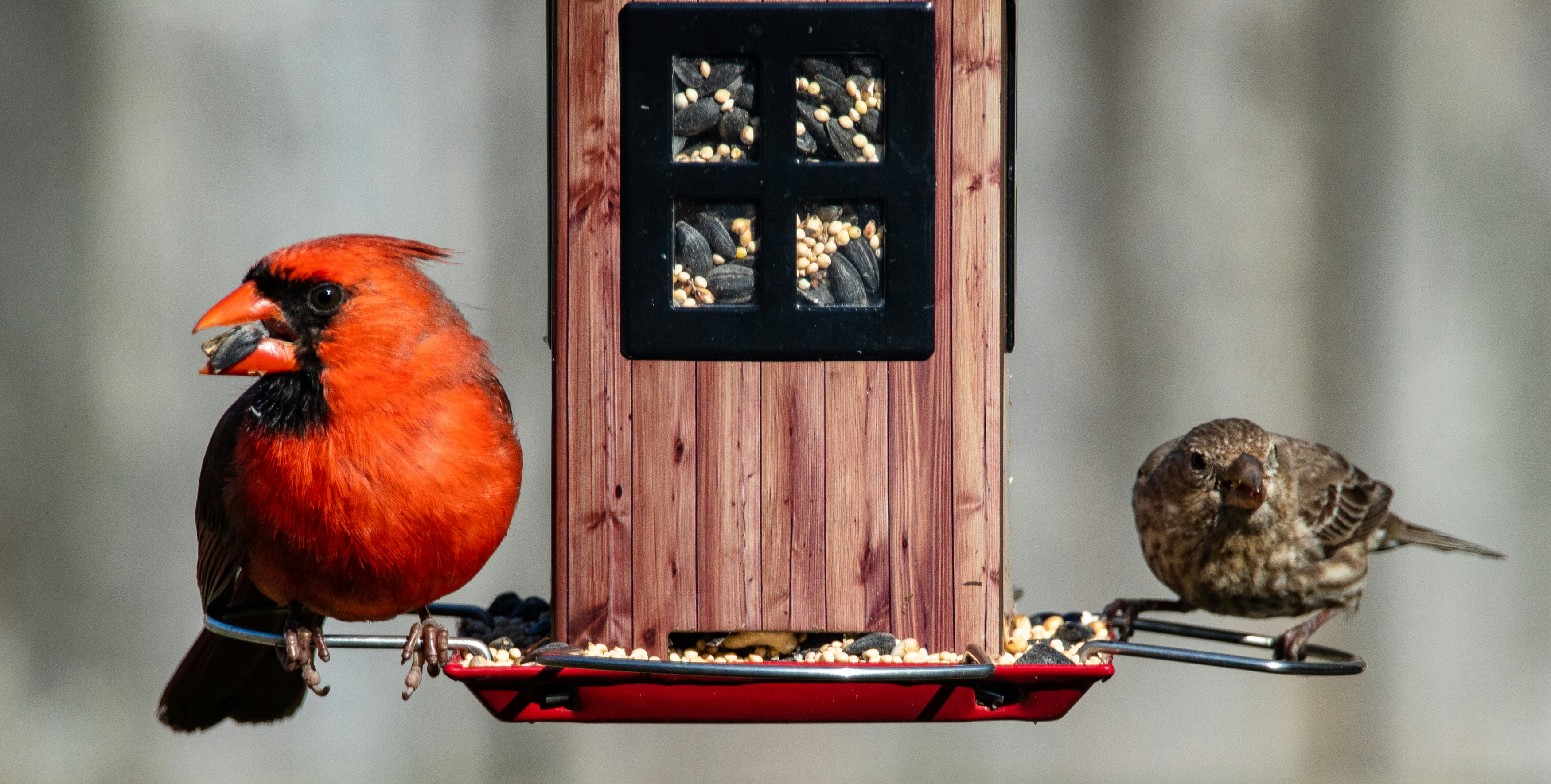
You don't need to drive to Point Pelee to see good birds. Some of the most rewarding birding happens right outside your window - if you set up your yard correctly. Here's how to turn an average Ontario backyard into a spot that attracts 20+ species year-round.
This post contains affiliate links. If you buy through them, we may earn a small commission at no extra cost to you.
Start with feeders - but place them right
The single biggest mistake new backyard birders make is putting feeders in the wrong spot. Birds need to feel safe, which means feeders should be within 3 metres of cover (a tree, shrub, or hedge) but not so close that a cat can ambush from it. Best feeder types for Ontario:
- Tube feeder with sunflower seeds - attracts chickadees, nuthatches, goldfinches, and house finches
- Suet cage - brings in woodpeckers, especially downy and hairy woodpeckers
- Platform feeder with mixed seed - cardinals, blue jays, juncos, and sparrows prefer feeding on flat surfaces
Water is the secret weapon
A shallow birdbath with a dripper or mister will attract species that never visit feeders. Warblers, vireos, and thrushes are drawn to moving water. In Ontario winters, a heated birdbath is one of the best investments you can make - open water is rare and birds need it.
Native plants make the difference
Long-term, native plantings do more for bird diversity than any feeder. Key species for Ontario:
- Serviceberry (Amelanchier) - fruit-bearing, attracts cedar waxwings, robins, and thrushes
- Native sunflowers - seed source for finches and sparrows
- White cedar / Eastern red cedar - winter shelter and berry source for waxwings
- Wild grape - catbirds, thrushes, and waxwings rely on it in fall
What to expect by season
Spring (April–May): Migration brings warblers, vireos, and thrushes through your yard temporarily. They rarely stay but they'll stop for water. Summer (June–August): Breeding residents - robins, cardinals, house finches, song sparrows. You'll see fledglings at the feeders. Fall (September–November): Another migration pulse, plus winter finch irruptions in some years. Watch for pine siskins and red-breasted nuthatches. Winter (December–March): Your core audience - chickadees, nuthatches, woodpeckers, cardinals, blue jays, and juncos. Consistent feeding matters most now.
One thing to avoid
Don't use bread. It's nutritionally empty and attracts rodents. Stick with black oil sunflower seed as your base - it's the single best all-purpose bird food and most Ontario species eat it.