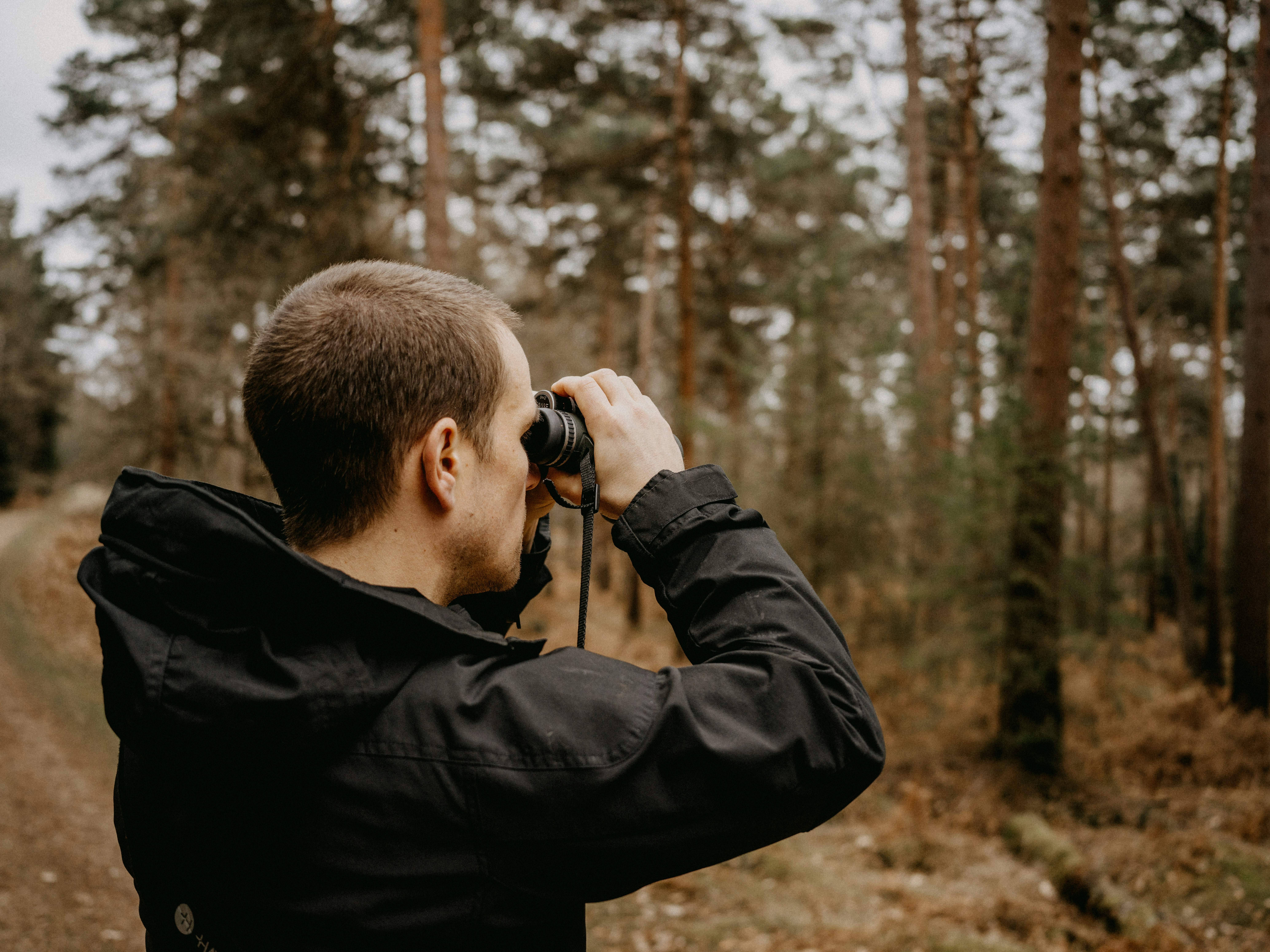
Best Binoculars for Beginners in Canada (Under $300 CAD)
Picking your first pair of binoculars shouldn't mean dropping a thousand dollars or squinting through a toy from the bargain bin. The best binoculars for beginners in Canada sit in a sweet spot: bright enough to pick a Black-capped Chickadee out of a spruce, light enough to wear on a two-hour walk, and cheap enough that you won't panic if you bump them on a car door. Every pick below is under $300 CAD on Amazon.ca, and we've flagged the trade-offs so you know what you're actually buying.
This post contains affiliate links. If you buy through them, we may earn a small commission at no extra cost to you.
What to Look For in a Beginner Pair
Before the picks, three numbers do most of the work.
Magnification and objective size. You'll see this printed as 8x42 or 10x42. The first number is how many times closer the bird appears. The second is the diameter of the front lens in millimetres, which controls how much light gets in. For birding, 8x42 is the standard beginner recommendation. It's bright, it's easy to hold steady, and the wider field of view makes it much easier to find a small bird in a tangle of branches. 10x42 sounds better on paper, but the shakier image and narrower view frustrate most new birders.
Weight. Anything over about 700 grams gets heavy on a long walk or around your neck at a feeder window. Roof prism designs (the straight-barrel style) are usually lighter than the older porro prism shape.
Close focus and eye relief. Close focus is the shortest distance the binoculars can sharpen on. Anything under 3 metres is fine for backyard birds and butterflies. Eye relief matters if you wear glasses: look for 15 mm or more, or you'll see a tunnel instead of the full view.
Waterproofing, fog-proofing, and a real warranty are bonuses that separate the genuinely good entry-level pairs from the disposable ones. In Canadian conditions, where you'll go from a cold car to a warm cabin (or vice versa) all winter, fog-proofing is more useful than people expect.
Comparison Table
| Model | Magnification | Weight | Close Focus | Waterproof | Approx. Price (CAD) |
|---|---|---|---|---|---|
| Celestron Nature DX 8x42 | 8x | 644 g | 2.0 m | Yes | $230 to $250 |
| Nikon Prostaff P3 8x42 | 8x | 605 g | 3.0 m | Yes | $120 to $140 |
| Vortex Crossfire HD 8x42 | 8x | 675 g | 1.8 m | Yes | $230 to $250 |
| Bushnell H2O 8x42 | 8x | 737 g | 3.7 m | Yes | $290 to $310 |
| Nikon Aculon A211 8x42 | 8x | 755 g | 5.0 m | No | $135 to $155 |
Prices fluctuate on Amazon.ca, especially around Prime Day and Black Friday. The ranges above reflect what these models were selling for at the time of writing, but always check the current listing before you buy.
Top Pick Overall: Celestron Nature DX 8x42
The Celestron Nature DX 8x42 is the one we recommend most often for new Canadian birders, and it's been a top entry-level choice for almost a decade for good reason. You get phase-coated BaK-4 prisms, fully multi-coated lenses, a wide 7.4 degree field of view, and a close focus of about two metres, which is excellent for warblers in nearby shrubs or backyard butterflies. It's waterproof, nitrogen-purged so it won't fog, and rubber-armoured for the inevitable bumps.
The trade-off is that edge sharpness drops off noticeably compared to binoculars that cost twice as much. The centre of the image is clean and bright, but objects near the edge of the view soften a bit. For a beginner, this is barely an issue. You'll be aiming the centre of the binoculars at the bird anyway.
At around $230 to $250 on Amazon.ca, it's the strongest balance of optics, build, and price in this category.
Best for Image Clarity: Nikon Prostaff P3 8x42
If you want the cleanest, most natural-looking image at the entry level, the Nikon Prostaff P3 8x42 is the pick. Nikon's lens coatings are excellent at this price, and the P3 delivers crisp colour and good contrast in daylight. It's also unusually light at 605 grams, which makes a real difference on longer outings.
There are two honest concessions. First, the close focus is listed at about three metres, which is fine but not as tight as the Celestron. Second, the included accessories (strap, lens covers, case) are basic. The lens covers don't tether, so plan on losing them within a season.
Expect to pay around $120 to $140 CAD on Amazon.ca, which makes it one of the best value picks on this list. If image quality matters more to you than bells and whistles, this is the one.
Best Warranty and Build: Vortex Crossfire HD 8x42
The Vortex Crossfire HD 8x42 sits in the same price bracket as the Celestron at around $230 to $250 CAD. What sets it apart is Vortex's VIP warranty, which is unconditional and transferable. Drop them off a canoe, leave them on the roof of your truck, have a grandchild use them as a hammer: Vortex repairs or replaces the pair regardless of fault, and you don't need a receipt. For a piece of gear you'll use outdoors for years, that's genuinely valuable.
Optically, the Crossfire HD is comparable to the Celestron and Nikon picks above. It includes a chest harness (the GlassPak), which makes a noticeable difference on hikes by taking the weight off your neck. The downside: it's the heaviest of the roof-prism picks here at 675 grams.
Best Budget Waterproof Pick: Bushnell H2O 8x42
The Bushnell H2O 8x42 is fully waterproof and fog-proof, and the rubber armour grips well in wet hands. For birders who paddle, fish, or just spend a lot of time near the Great Lakes coast, it's a rugged choice that handles wet conditions without complaint.
Be realistic about the optics and the price. At around $290 to $310 CAD on Amazon.ca right now, the H2O is sitting at the top of our budget, and you can get sharper glass for less money from the Celestron or Nikon Prostaff P3. The image is bright enough but not as crisp, and the close focus of about 3.7 metres is too long for small birds nearby. If you find the H2O on sale for closer to $150, it becomes a much easier recommendation. At full price, only buy it if waterproofing is your top priority.
Rock-Bottom Budget Pick: Nikon Aculon A211 8x42
For someone who isn't sure if birding will stick, the Nikon Aculon A211 8x42 lets you test the hobby for around $135 to $155 CAD. The optics are surprisingly decent thanks to Nikon's lens coatings, and the porro prism design (the classic offset-barrel shape) actually gives a slightly better sense of depth than a roof prism at this price.
The catches are real. It's not waterproof, it's not fog-proof, and the close focus of five metres is poor for backyard use. The porro prism body is also bulkier and heavier than the alternatives. Honestly, at this price the Nikon Prostaff P3 is a far better buy, since it's waterproof, lighter, and not much more expensive. The Aculon makes sense only if the P3 is out of stock or you specifically want the porro prism look.
Where to Buy in Canada
Amazon.ca is the most convenient option and usually has competitive pricing across these five models. Specialty retailers like Henry's, Vistek, and regional bird stores (Wild Birds Unlimited, Backyard Bird Centre) often match Amazon on price and can let you handle the binoculars before buying, which is genuinely useful. If you wear glasses or have a narrower face, trying a pair in person can save you a return.
Avoid no-name brands on Amazon.ca that show 4.7-star ratings, sub-$80 prices, and vague specs. They usually use cheap glass that smears at the edges and falls out of alignment within a year.
FAQ
What magnification is best for beginner birders?
Stick with 8x42 for your first pair. The 8x magnification is easier to hold steady than 10x, the field of view is wider (making it easier to find birds), and the image is brighter in low light. You can graduate to 10x42 later if you find yourself often watching distant shorebirds or raptors.
Are cheap binoculars under $100 worth it for birding?
For occasional backyard use, a sub-$100 pair can be fine. For dedicated birding, save up to the $130 to $250 range. The jump in optical quality between $80 and $150 is enormous, while the jump from $250 to $500 is much smaller. Beginners get the most value in that mid-bracket.
Do I need waterproof binoculars in Canada?
Yes, more than you'd think. Even in summer, sudden rain on a trail or condensation when you bring binoculars from a cold car into a warm house can damage non-sealed optics over time. Waterproof, nitrogen-purged binoculars hold up much better through Canadian winters and shoulder seasons.
What's the difference between roof prism and porro prism binoculars?
Roof prisms have straight barrels and are more compact, lighter, and usually more durable. Porro prisms have the offset, wider-bodied look. Porro prisms can offer slightly better depth perception and brightness for the money at the very low end, but roof prisms have become the standard for birding because they're easier to carry and tougher in the field.
Can I use binoculars with glasses?
Yes, but check the eye relief spec. You want at least 15 mm, ideally 17 mm or more, and twist-up eyecups so you can fold them down when wearing glasses. All five picks above work for glasses wearers, though the Nikon Prostaff P3 and Vortex Crossfire HD have the most generous eye relief.
Bottom Line
For most beginner Canadian birders, the Nikon Prostaff P3 8x42 is the best value at around $120 to $140, with the Celestron Nature DX a close second if you want a slightly wider field of view and tighter close focus. The Vortex Crossfire HD is worth the same price as the Celestron if the unbeatable VIP warranty matters to you. Once you've got your binoculars sorted, the next step is giving the birds a reason to show up, which we cover in our guide on how to attract more birds to your backyard in Ontario.